
Beaches of
NormandyTours
NormandyTours
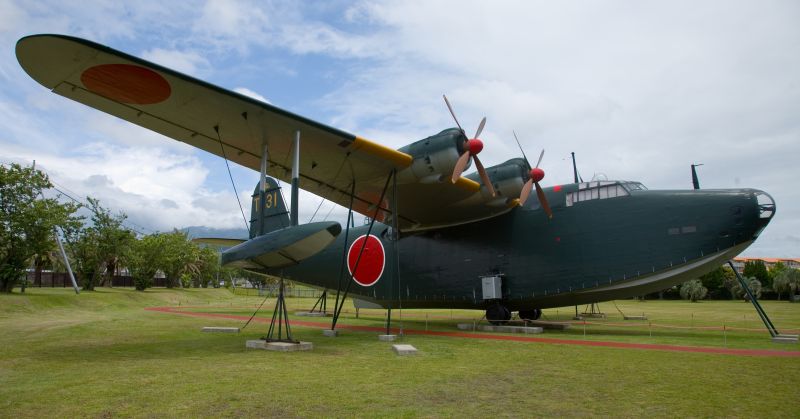
The Japanese attack on Pearl Harbor on December 7, 1941, was one of the defining moments of World War II. The massive attack by some 350 aircraft that caused serious damage and drew the U.S. into the war is taught in every school. But have you ever heard of the much smaller-scaled follow-up, “Operation K”?
After the attack, Japan understandably wanted to know just how much damage it caused to the U.S. Pacific Fleet, so it started planning a recon mission over Pearl Harbor. The logistics of such a mission were a massive hurdle, since Japan had no territories close enough to launch a purely air-based mission from.
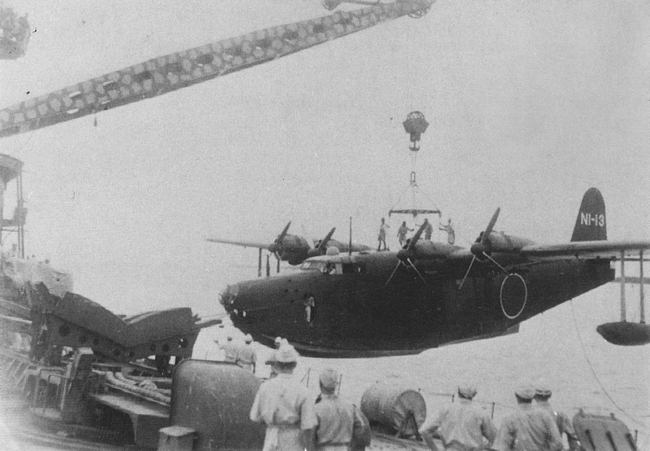
The solution was the brand-new four-engine Kawanishi H8K (Allied reporting name “Emily”) flying boat, which had never flown a mission before. The H8K had a massive range of 4,444 miles (7,152 km); for comparison, the Consolidated PBY Catalina flying boat had a range of 2,520 mi (4,060 km), and the B-29 Superfortress 3,250 mi (5,230 km).
Even so, the Emilies on the mission had to land on water somewhere and refuel from some waiting submarines. The original plan went like this: five H8K’s would take off from Wotje Atoll in the Marshall Islands (close to 2,300 miles (3,700 km) from Pearl Harbor), and head for French Frigate Shoals, in the Northwest Hawaii Islands, where they would refuel from subs. From there, they would head east-by-southeast to Pearl Harbor to take stock of the situation and drop some bombs to hinder recovery and repair operations.
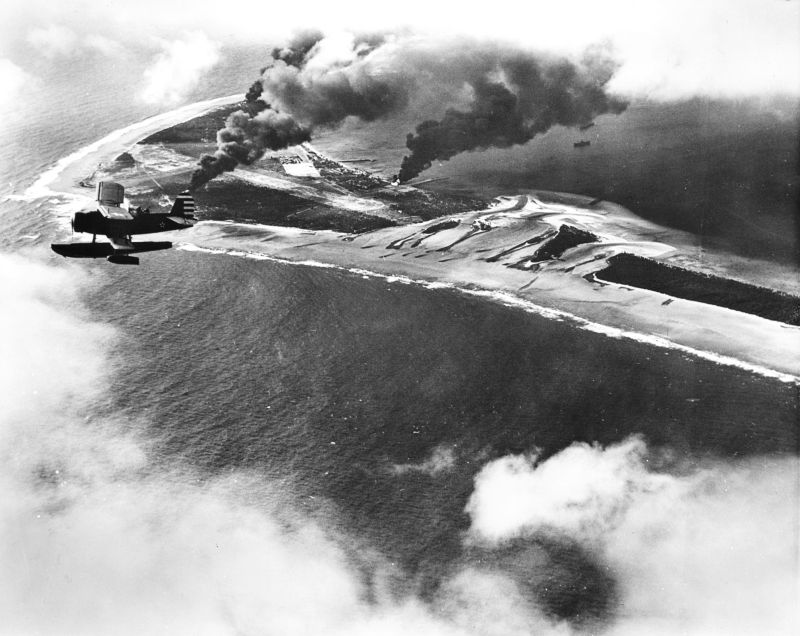
Only two H8Ks were available on March 4, the planned date for the mission, so the mission had to go ahead with a reduced force. Another snag was that the Japanese submarine stationed near Pearl Harbor to act as a weather spotter had just disappeared a week earlier, assumably lost to an unknown cause. Without reports from the sub, the Japanese did not realize that the skies above Pearl Harbor were cloudy.
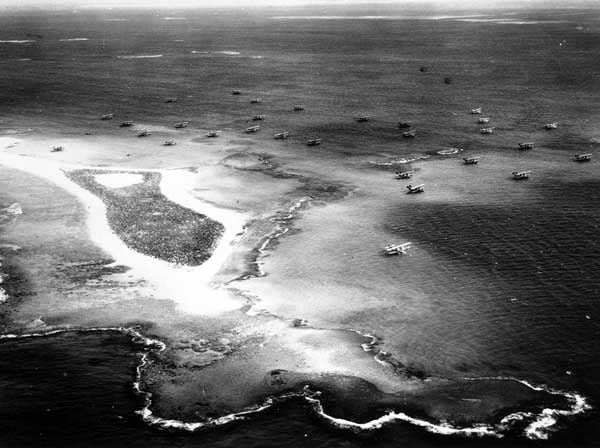
American codebreakers were aware of an upcoming Japanese recon mission, but, like before the Day of Infamy, their warnings were largely ignored. The two planes were picked up by American radar, but the planes sent out to find them or the carriers they assumably took off from failed to find anything. In the end, it wasn’t American military force but the weather that foiled the mission.
The two planes split up while approaching the target because one pilot could not hear the other’s orders. One of the planes proceeded with the bombing run, but ended up hitting the slopes of Mount Tantalus, only managing to break some windows in a nearby school.
The one positive aspect of the mission, though one of dubious value, was a new world record. One of the planes damaged its landing gear while taking off from French Frigate Shoals, and the pilot was wary of landing back at Wotje Atoll. Instead, he flew all the way to his home base at Jaluit Atoll (also in the Marshall Islands), which had better repair facilities. The unplanned extra stretch made his flight the longest bombing mission in history up to that point, and the mission still holds the record of the longest two-bomber mission ever, and one of the longest bomber missions without a fighter escort.
If you would like to learn more about the Japanese attack on Pearl Harbor, its causes and consequences, and America’s entry into World War II, join us on our new Pearl Harbor Anniversary Tour!









Beaches of Normandy Tours
Beaches of Normandy Tours SAS, Normandy, France
Band of Brothers Tours
Band of Brothers Tours FZCO, Dubai, UAE