
Beaches of
NormandyTours
NormandyTours
.jpg)
Winston Churchill is one of the most iconic and important figures of World War II, and of 20th century British history. He is remembered for his leadership of Britain during World War II, but how much do you know of the rest of his career? The first part of our article (Churchill – Part I ) covered Churchill’s life up to World War I; today we’ll take a look at his interwar years, his leadership of the United Kingdom during World War II, and his post-war career.
Churchill served as Secretary of State for the Colonies in 1921-22. He helped draft the Anglo-Irish Treaty that concluded the Irish War of Independence, and was involved in installing local Arab kings in Iraq and Jordan to reduce the British cost of occupying the Middle East. As a supporter of Zionism, he rejected a Palestinian petition to prohibit Jewish immigration to Mandatory Palestine.
David Lloyd George’s coalition government dissolved In October, and Churchill lost his parliamentary seat at the next election. He spent the next half a year on the French Riviera, devoting himself to painting (a hobby he picked up in 1915 and was rather good at for an amateur) and writing his memoirs. A minority government led by the relatively new Labour Party came to power in 1923. A stout anti-Communist and anti-Socialist, Churchill opposed the new government’s decision to loan money to Russia. He began calling for a Conservative-Liberal coalition to defeat Labour. Alienated by Liberal support for Labour, Churchill made several attempts to return to Parliament by winning a seat, eventually doing so with Conservative backing. The new Conservative Prime Minister, Stanley Baldwin, appointed Churchill as Chancellor of the Exchequer (Secretary of the Treasury in the U.S.) despite him having no experience with finance or economy.
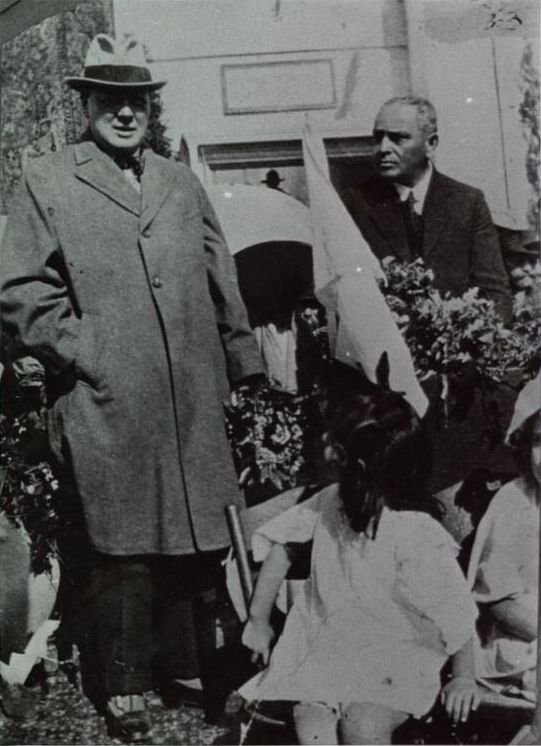
Churchill served in the position from 1924 to 1929. He advocated free trade, local tax cuts, lowering the pension age, and support for coal miners. He also followed the advice of the Bank of England and several leading economists to return to the gold standard. This proved to be a terrible decision, as it resulted in deflation, unemployment, and a general strike in 1926. He visited Italy in 1927 and met Mussolini twice. He made glowing remarks about the Duce afterwards, calling him a “Roman genius…the greatest lawgiver among living men.” He received much criticism for this, but it should be noted that the admiration was aimed not at Fascism, but Mussolini’s energetic anti-Leninism, which Churchill shared. His opinion of the Italian dictator quickly soured in the years leading up to World War II.
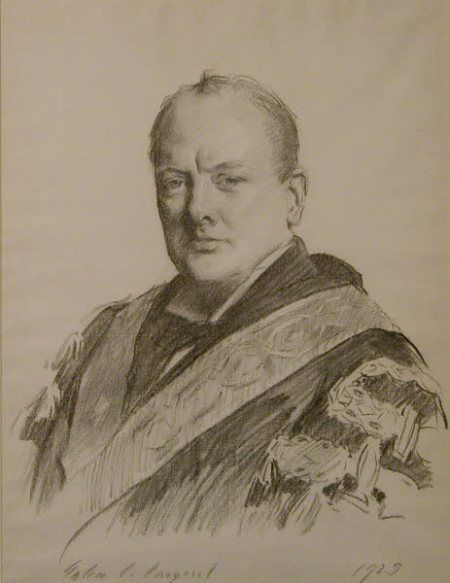
The Conservatives were defeated by a new Labour government in 1929. The next decade of Churchill’s life is known as his “wilderness years,” in which he held no office but was still active politically. He argued against the new government’s decision to grant Dominion status, the highest level of self-governance within the British Empire, to India. He argued that the status would hasten India’s full independence, and that the Hindu Brahmin caste would end up in power and persecute both the “Untouchables” living at the bottom of traditional Hindu society and religious minorities. He also spoke out against Gandhi’s independence movement.
Churchill suffered heavy financial losses in the Wall Street crash of 1929, and went on a lecture tour of North America to recover from them. He was hit by a speeding car in New York City, suffering a head wound, two cracked ribs and neuritis, forcing him to cancel some of his lectures while convalescing.
He traveled to Belgium, the Netherlands and Germany in 1932 to visit the battlefields of his ancestor John Churchill, 1st Duke of Marlborough, whose life he wrote a book about. In Germany, almost met Adolf Hitler, who was close to seizing power. (Becoming Führer) The meeting fell through because Churchill raised vocal concerns about Hitler’s anti-Semitic rhetorics.
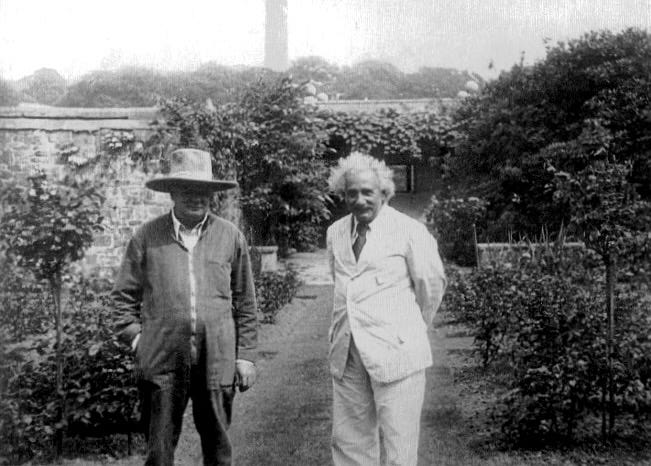
The India Bill was passed in 1935, setting India on the course for Dominion status and eventual independence. Though he still had reservations, Churchill recognized the inevitable and offered Gandhi his support, saying "You have got the thing now; make it a success and if you do I will advocate your getting much more." He also stated that he had new esteem for Gandhi after he stood up for the Untouchables. A new Conservative government formed later in the year, but Churchill was not given a position in it. He continued warning about Germany and the development of the Luftwaffe, calling for war preparations, and associating with the leftist Anti-Nazi Council outside the government.
Prime Minister Baldwin resigned in May 1937 and was succeeded by Neville Chamberlain. Chamberlain pursued a policy of appeasement towards Hitler and Mussolini, which set him and Churchill on a collision course. After the Anschluss (The Road to Anschluss) in 1938, Churchill spoke in the House of Commons: “A country like ours, possessed of immense territory and wealth, whose defence has been neglected, cannot avoid war by dilating upon its horrors, or even by a continuous display of pacific qualities, or by ignoring the fate of the victims of aggression elsewhere. War will be avoided, in present circumstances, only by the accumulation of deterrents against the aggressor.” Later that year, Britain and France allowed Hitler to annex the Sudetenland in the Munich Agreement, which Churchill called “a total and unmitigated defeat.” Churchill’s opposition to appeasement, and his calls for a national coalition, increased his popularity.
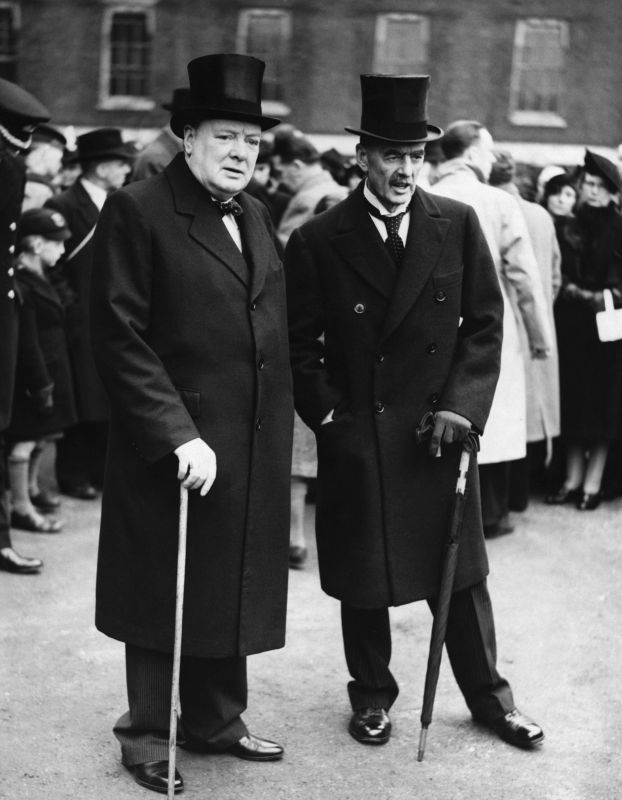
Hitler invaded Poland on September 1, 1939. Britain declared war on the Third Reich the next day, and Chamberlain reappointed Churchill as First Lord of the Admiralty on the 3rd. Churchill ordered the Royal Navy to mine the coasts of Norway to prevent Germany from shipping imported iron ore purchased in Sweden.
The German invasion of Norway (The German Invasion of Norway) proved the failure of Chamberlain’s appeasement policy. A three-day debate ended with a “division of assembly,” a procedure that amounted to a vote of no confidence against Chamberlain. On the following day, Germany invaded Belgium, Luxembourg and the Netherlands. Chamberlain was scrambling to assemble a coalition government, but Labour declared that while they would be willing to participate in one, they wouldn’t serve under him. The only two Conservative politicians who could be considered for Prime Minister were Churchill and Foreign Secretary Lord Halifax. Halifax said he wouldn’t be an effective Prime Minister, since he was in the House of Lords and had little contact with the House of Commons. Accepting the argument, Chamberlain recommended Churchill to the king as his replacement, and Churchill, 65 at the time, found himself in the position that defined his career.
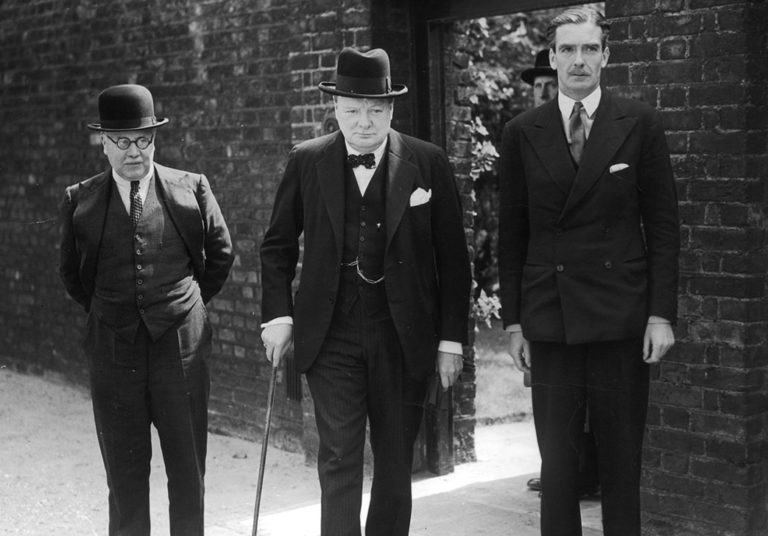
Prime Minister Churchill was actually not very popular in Parliament at first. The Labour party had not forgotten his hostility, many Conservatives resented how often he went against the party line, and the House of Lords did not comment on his appointment. A few months later, however, an American writer reported: "Everywhere I went in London people admired [Churchill's] energy, his courage, his singleness of purpose. People said they didn't know what Britain would do without him. He was obviously respected. But no one felt he would be prime minister after the war. He was simply the right man in the right job at the right time. The time being the time of a desperate war with Britain's enemies."
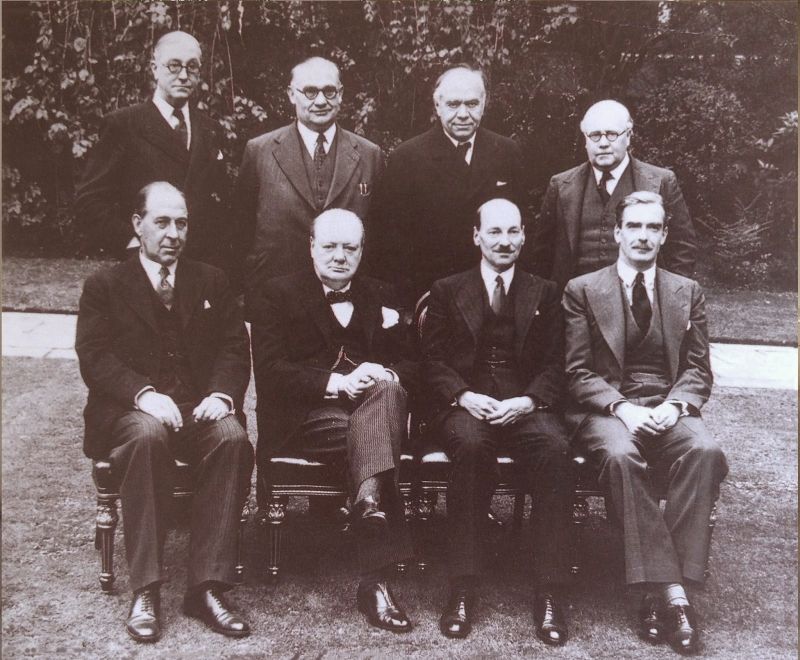
Churchill set up a five-man war cabinet (later expanded to eight) which included Chamberlain, his predecessor, and Labour leader Clement Attlee, who would succeed him in 1945. There was no single ministerial position in charge of the prosecution of the war, so he created the new post of Minister of Defence and gave it to himself.
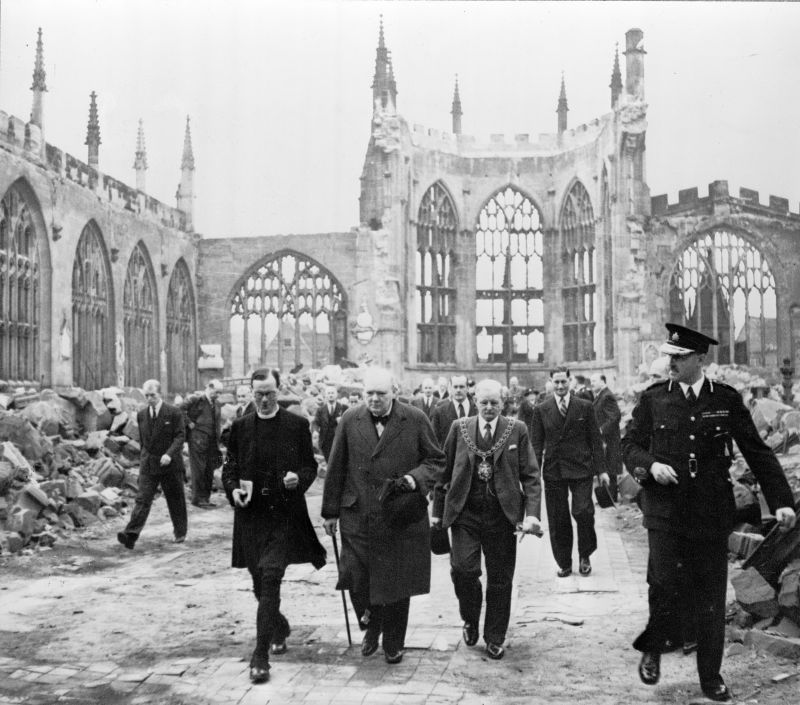
Churchill’s doggedness and his formidable rhetoric pulled Britain through the worst months of the war. The fall of France and the Dunkirk evacuation (The “Miracle of Dunkirk”), the Battle of Britain (The Dowding System), the setbacks in North Africa and the threat of a German invasion (The Sea Lion That Sank) all hatched speeches that galvanized the nation and catchy phrases that are still remembered today. Even during the heaviest bombing, he refused to evacuate the government from London and watched air raids from the rooftops. He was confident that Britain could protect herself on her own, but was aware that the country could not actually win without American help. His good relations with President Roosevelt helped him nudge the President closer and closer to the Lend-Lease agreement (America’s Politics Before World War II), and later open alliance.
Enigma messages decrypted at Bletchley Park revealed the German intention to invade the Soviet Union. Though an avowed enemy of Communism, Churchill recognized the necessity of an alliance with the Soviets and warned Stalin. Stalin, however, did not trust Churchill, and was caught unprepared by the German attack. Churchill exerted great effort throughout the war, not only keeping things in hand at home, but also participating in a series of high-level Allied war conferences. (Planning World War II – Part I) (Part II)
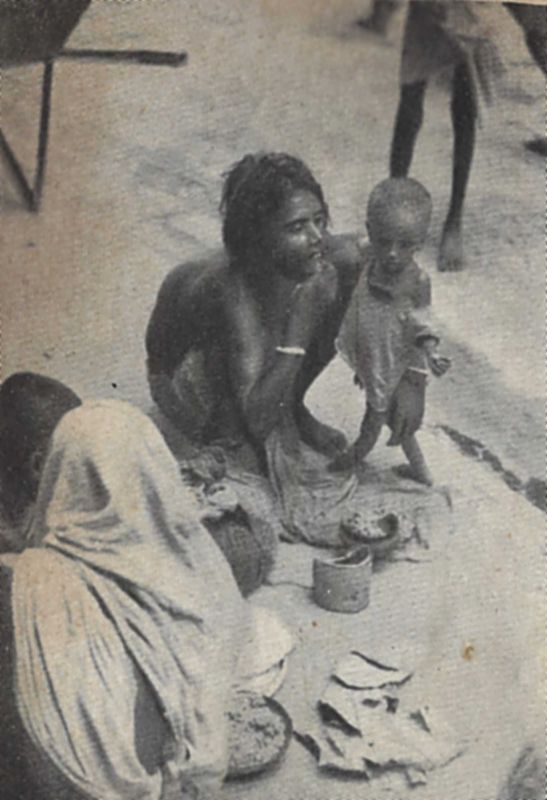
Britain’s – and Churchill’s – setbacks and successes in the war are well-documented, but one lesser-known issue bears separate mention here. The Bengal region, straddling northeast India and modern-day Bangladesh, experienced a massive famine in 1943 that killed between 800,000 and 3.8 million people. Churchill’s critics sometimes claim that he caused the famine by refusing to send food shipments to the region. The truth is more complicated.
Bengal had several years of poor crops, which were followed by a devastating cyclone, flooding and crop disease in the fall and winter of 1942. Normally, the region could have imported rice from nearby Burma, but Burma was under Japanese occupation. Poor decisions by low-level colonial authorities, as well as the inflation and economic havoc caused by the war led to tragedy. Once Churchill ordered the transportation of grain once he realized the severity of the situation, but this only happened in late 1943 due to the tardiness of local authorities in declaring an official famine. Churchill had also been attacked for not sending enough food, but it should be noted that the British Empire had limited maritime transport capacity in the region at the time, and what they did have was threatened by Japanese submarines. Controversy over the matter persists to this day; we believe that Churchill should only shoulder a part of the blame at worst, since many of the decisive factors were out of his hands.
A general election was looming in 1945, and with victory in sight, the Labour Party decided to no longer support the national coalition. Churchill resigned as prime minister on May 23, and accepted the King’s invitation to form a new “caretaker ministry” until the next elections.
The elections were held on July 5, but the results were only tallied on July 26 to give soldiers serving overseas time to send their mail-in votes. Meanwhile, the Potsdam Conference opened on July 17, with Churchill, Labour leader Clement Attlee, President Truman and Stalin all in attendance. After years of energetic duty, Churchill seemed to have finally run out of energy. His performance was described as “appalling,” unprepared and verbose; he upset the Chinese delegates, frustrated the Americans, and was dominated by Stalin.
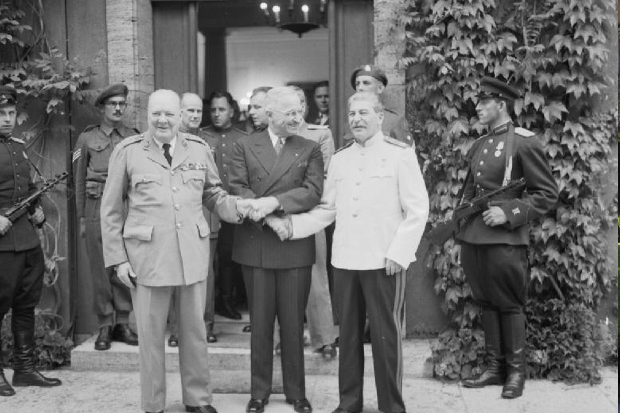
The election results were announced during the conference. In a major shock, Churchill and the Conservatives, as well their Liberal allies, had been soundly beaten by Labour. There’s much speculation on the reasons behind the defeat, and several explanations are put forward. Churchill mishandled the election campaign by descending into party politics and denigrating Labour, making one serious gaffe in a radio broadcast by saying the Labour government would need “some form of Gestapo” to enforce its agenda. He also seemed to neglect (somewhat understandably) social reforms during the war, while the Labour campaign focused on the issue. While Churchill was very popular, the Conservative Party at large was not nearly so, since people still associated them with the failed appeasement policy before the war. Finally, Churchill was not nearly as popular with soldiers as with civilians, as the former were afraid of unemployment after the war.
Churchill continued to lead the Conservative Party as Leader of the Opposition. He made his famous “Iron Curtain” speech while on a trip to America in early 1946. He also coined the term “special relationship” to describe the relationship between America and the British Empire, the two powers he thought needed to maintain a close alliance to offset Soviet influence.
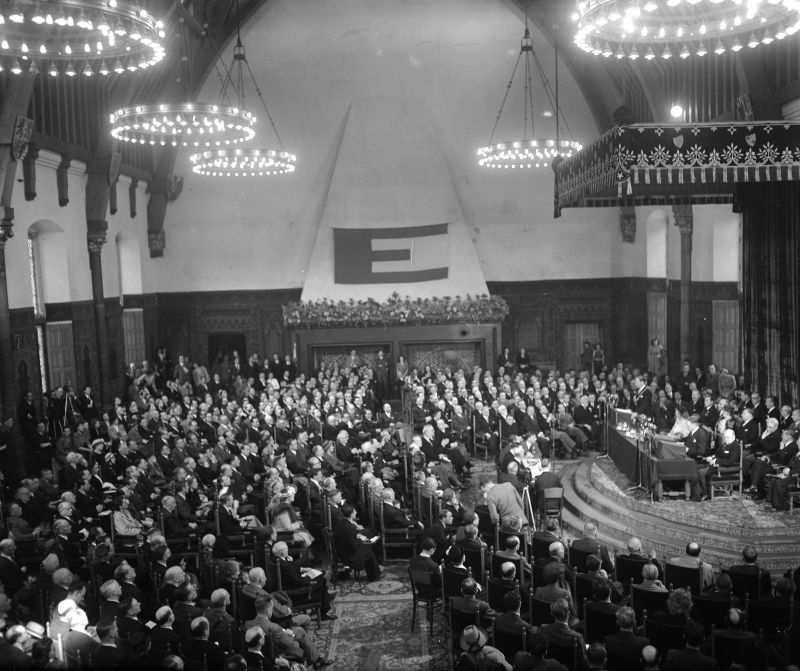
Churchill was an early proponent of pan-Europeanism, and had already called for a “United States of Europe” in 1930. After the war, he became a driving force behind the creation of the Council of Europe. His support of European unity, however, was not unlimited. He encouraged cooperation between European states, including the United Kingdom, but refused to have Britain join any form of federal organization. He wrote in 1930: “We have our own dream and our own task. We are with Europe, but not of it. We are linked, but not comprised. We are interested and associated, but not absorbed.” Churchill had to acknowledge the diminished power and importance of the British Empire after World War II, and changed his tack, advocating a united Europe that would include Britain. He is counted among the eleven “Founding fathers of the European Union.”
Churchill became Prime Minister once more, from 1951 to 1955. It was a far less dramatic time than his first stint; his government introduced reforms regarding housing repairs and rent control, and health and safety regulations in mines and quarries.
Churchill was growing old and frail. The only reason King George VI did not ask him to resign was that the King died before he could have that conversation. Churchill suffered a serious stroke in June 1953 which left him partially paralyzed on one side, but he presided over a cabinet meeting the next morning without anybody noticing the change. The public and Parliament were kept in the dark about his condition as long as it was possible. He eventually retired in 1955.
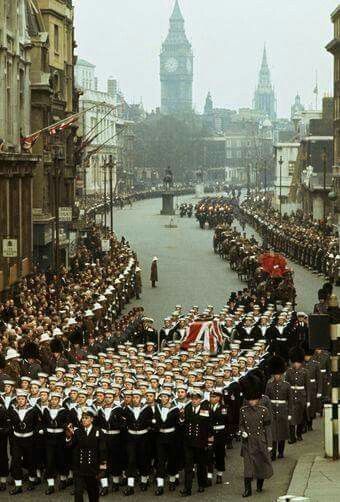
Churchill died on 24 January 1965, two weeks after his last stroke (at least the seventh in his life). He was given a state funeral, a rare honor (and the last one to date) for non-royals. He was placed to rest in the family plot near his birthplace at Blenheim Palace.
This was the brief life of Winston Churchill; but what general observations can we make of his politics? For starters, he was certainly a man who followed his own values, changing parties twice in his life based on which political group helped him pursue his ideals better. By modern standards, those values were a peculiar mix of liberalism (which he himself claimed to be closer to) and conservatism. He believed in individual liberties; a free market; and trade unions, which, perhaps surprisingly, he considered to be the antithesis of socialism. At the same time, he was a stalwart supporter of the British Empire and tried to prevent its dissolution.
It is perhaps most accurate to describe him as a benevolent paternalist. He believed there was a natural hierarchy in society as well as between different peoples, with white Protestants at the top. He also believed that those in power have a moral duty to improve the lives of those who are lower on the ladder. This was the source of his reform efforts aimed at the working class: he wasn’t trying to upset the social order, he was trying to preserve it by giving the less fortunate what they needed. The same attitude writ large also gave him his romanticized view of the monarchy and the British Empire: he opposed the independence of “lower races” because he believed the Empire could help them better than they could help themselves.
While Churchill’s views on racial hierarchy seem racist today, he was also, perhaps contradictorily, an admirer of Jews, whom he described as “the most formidable and the most remarkable race.” He was a supporter of Zionism and a protector of Jewish interests in Palestine at a time when casual anti-Semitism was accepted in British high society. At the same time, he had often made shockingly racist remarks about Arabs and Chinese – though some who knew him claimed he often made deliberately outrageous statements only to put them in a new light with his next thought.
You can learn more about Churchill’s role in World War II, visit his secret underground war rooms, and see other sites related to the Battle of Britain and Britain’s war effort on our Britain at War Tour.







Beaches of Normandy Tours
Beaches of Normandy Tours SAS, Normandy, France
Band of Brothers Tours
Band of Brothers Tours FZCO, Dubai, UAE